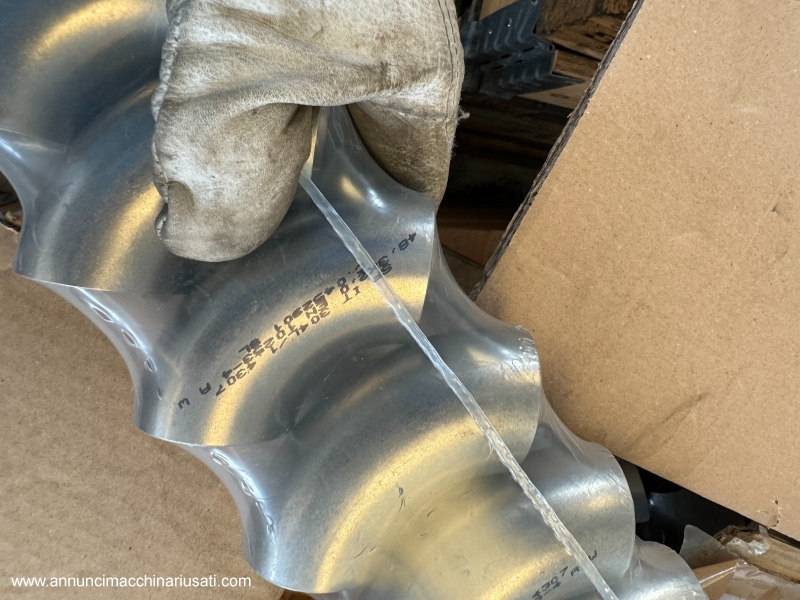
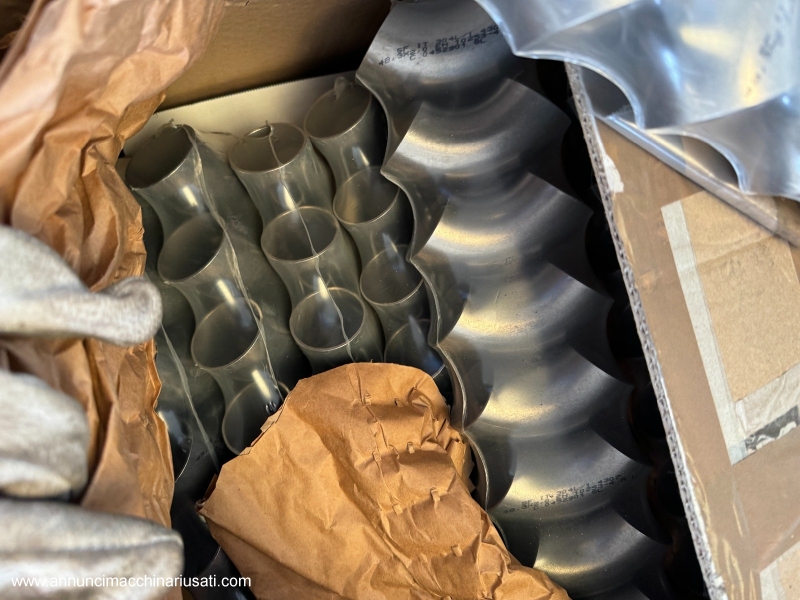
The SF IT 304L / 1.4307 48.3x2.0 mm EN 10253-4 AW elbow fitting is a key component used in numerous industrial sectors, especially in fluid transport piping systems. This type of fitting is made from 304L, an austenitic grade that guarantees high corrosion resistance due to its low carbon content. The EN 10253-4 specifies the technical requirements for austenitic and duplex stainless steel fittings intended for fusion welding, ensuring they are suitable for use under pressure.
Visual description and components:
The SF IT 304L curved fitting features a polished, smooth, and free of irregularities, typical of stainless steel. Its curved shape is designed to accommodate angular deflections in pipes without compromising pressure or sealing. Fittings of this type are often used in pipeline networks, especially those subjected to high loads or aggressive conditions. This fitting is precisely sized: it has a diameter of 48.3 mm and a wall thickness of 2.0 mm.
Technical features:
- Material : 304L (1.4307) stainless steel .
- Dimensions: 48.3mm outer diameter and 2.0mm wall thickness.
- Regulation: compliant with EN 10253-4, which regulates welded stainless steel fittings for pressure systems.
- Manufacturing process: The fitting is manufactured by hot or cold forming processes, with heat treatments to ensure the right microstructure and optimal mechanical properties.
- Corrosion resistance: excellent, thanks to the chemical composition of 304L, which includes chromium and nickel.
- Finish: Stainless steel provides a smooth, abrasion-resistant finish.
How to use:
The SF IT 304L elbow fitting is typically used in piping systems where fluid flow needs to be diverted. Installation requires fusion welding techniques, as specified in the EN 10253-4 standard. Welding must be performed by qualified personnel, following well-defined parameters to ensure a safe and durable connection.
Matching accessories:
This fitting can be combined with other piping components such as flanges, joints, and gaskets made of compatible materials, always in stainless steel or highly corrosion-resistant materials. Specifically, the choice of accessories depends on the working environment (such as temperature and pressure) and the type of fluid transported.
Mathematical formulas for optimal use:
To correctly use the SF IT 304L bend fitting in a system, it is essential to calculate the pressure losses caused by deviations in the pipes. One of the most common formulas for estimating pressure losses in a bend is the Darcy-Weisbach:
ΔP=f⋅LD⋅ρv22\Delta P = f \cdot \frac{L}{D} \cdot \frac{\rho v^2}{2}ΔP=f⋅DL⋅⋅2ρv2
Where:
- ΔP\Delta PΔP is the pressure loss,
- fff is the friction factor,
- LLL is the equivalent length of the curve,
- DDD is the diameter of the pipe,
- ρ\rhoρ is the density of the fluid,
- vvv is the velocity of the fluid.
Workable materials:
The SF IT 304L elbow fitting is suitable for transporting corrosive fluids, water, steam, oils, and chemicals. Its corrosion resistance allows it to be used in marine environments or with aggressive fluids.
Maintenance and inspection of a good used vehicle:
To keep the fitting in good condition, it's important to periodically inspect the welds and the surface of the fitting for corrosion or deformation. When considering purchasing a used fitting, it's a good idea to check its structural integrity and compliance with standards such as EN 10253-4. A fitting in good condition should have a surface free of deep scratches and well-executed welds.
Sectors of use and advantages of used:
This type of fitting is widely used in the chemical, petrochemical, food, and pharmaceutical industries. Purchasing a used fitting like the SF IT 304L can be cost-effective, especially when the machine maintains its structural integrity and performance is guaranteed. Furthermore, 304L stainless steel is highly durable, extending the component's service life even when used.