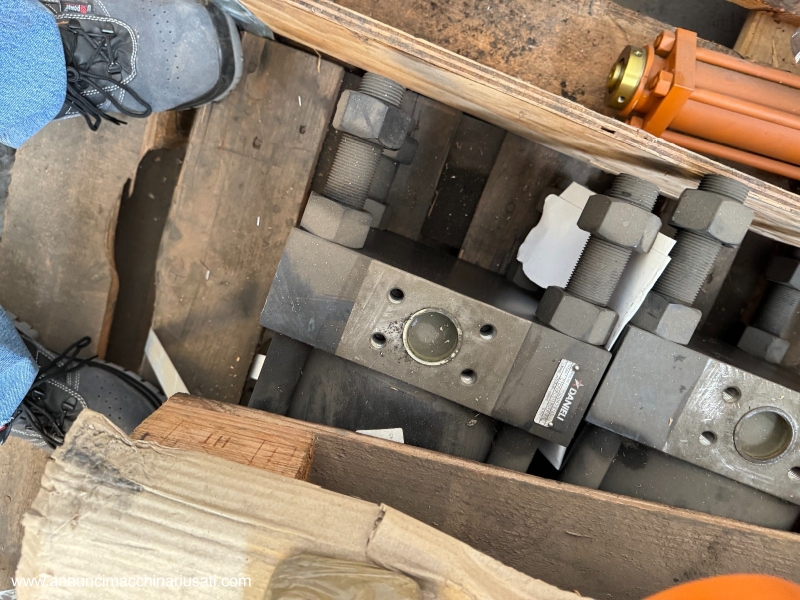
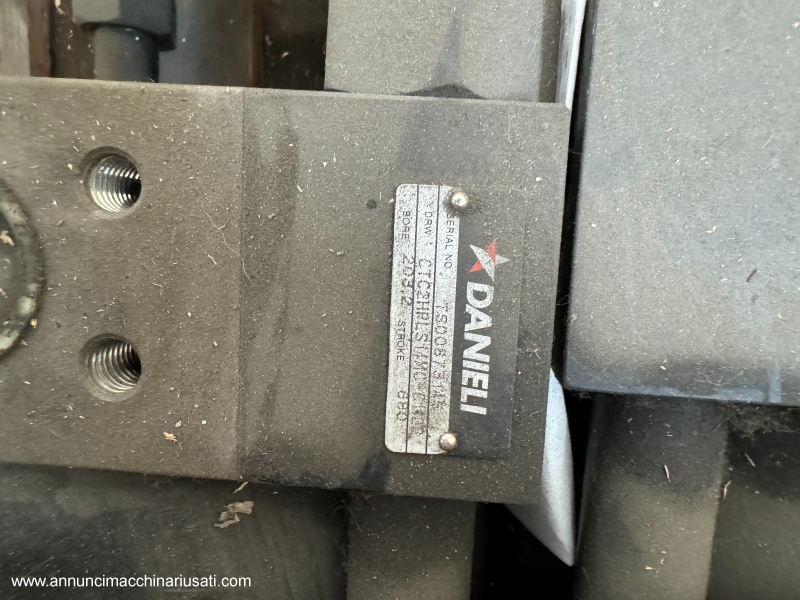
Hydraulic Cylinder Bore 203.2 mm x Stroke 680 mm
1. Construction and Materials
A hydraulic cylinder with a bore of 203.2 mm and a stroke of 680 mm is an essential component for lifting, handling, or hydraulic press systems. Typically constructed of high-strength steel for the cylinder tube and piston, the shaft may be made of chrome-plated steel to resist corrosion and reduce friction during use. Seals and O-rings are generally made of polyurethane or nitrile rubber, materials that ensure watertightness and resistance to oil and pressure.
2. Dimensions
- Bore (inside diameter): 203.2 mm
- Stroke (travel length): 680 mm
- Rod diameter: Variable, but typically 80-100mm for cylinders of this size, depending on operating pressure.
- Overall Cylinder Dimensions: The overall length of the cylinder (at rest) can be calculated as the sum of the stroke, bore length, and cylinder ends, including any mounting plates.
3. Mechanical Features
-
Maximum operating pressure: Typically between 250 and 350 bar, depending on model and construction.
-
Force generated: The output force depends on the applied pressure and the piston area. The formula is:
F=P×AF = P \times AF=P×A
Where:
- FFF is the force (in Newtons)
- PPP is the pressure (in Pascals or N/m²)
- AAA is the area of the piston, calculated as:
A=π×d24A = \pi \times \frac{d^2}{4}A=π×4d2
With ddd equal to the bore (203.2 mm).
-
Rod speed: Determined by the hydraulic oil flow and the internal volume of the cylinder.
4. Sectors of Use
These cylinders are mainly used in heavy industrial sectors, such as:
- Lifting and handling machinery (cranes, overhead cranes)
- Hydraulic presses for metal deformation
- Agricultural sectors (equipment such as plows or tractors)
- Construction and infrastructure (earthmoving machinery)
5. Power Calculations
The power generated by the cylinder at various pressures can be calculated using the formula:
P=F×v1000P = \frac{F \times v}{1000}P=1000F×v
Where:
- FFF is the force in Newton,
- vvv is the speed of the stem (m/s),
- The power PPP is expressed in kilowatts.
For example, at a pressure of 250 bar, the force generated can be calculated as follows:
- Piston area: A=π×(0.2032)24=0.0325A = \pi \times \frac{(0.2032)^2}{4} = 0.0325A=π×4(0,2032)2==0,0325 m².
- Applied pressure P=250×105P = 250 \times 10^5P=250×105 N/m².
- Force: times 10^5 \times 0.0325 = 812.500F=250×105×0.0325\812.500=××N. =
6. Advantages of Buying Ready-to-Deliver from Stock
Buying a hydraulic cylinder ready for delivery offers advantages such as:
- Reduce downtime: Having components readily available is essential to avoid long machine downtime.
- Greater flexibility: A stock component can be replaced quickly, improving production efficiency.
- Competitive Pricing: Buying in bulk can offer more competitive pricing than custom orders, especially if the component is from a reliable supplier.
7. Brand Description
Many leading manufacturers, such as Cross Hydraulics, produce cylinders with high quality and durability specifications. Cross Hydraulics, for example, is known for producing robust and long-lasting tie rod cylinders, using high-quality materials to ensure product reliability.