


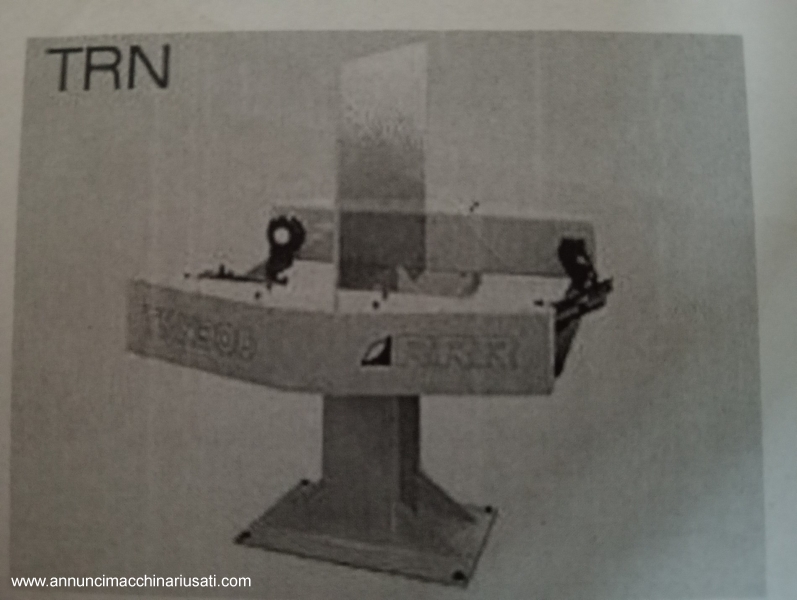
DOUBLE POSITIONER FOR ROBOTIC LATHE TRN/300 WITH THREE CONTROLLED AXES. DISTANCES BETWEEN CENTERS 1500 mm. MAXIMUM LOAD CAPACITY PER STATION 300 KG.
Technical Data Sheet for the RRRobotica TRN/300 Three-Axis Controlled Double Lathe Positioner
Brand: RRRobotica Model: TRN/300 Type: Double Lathe Positioner with Three Controlled Axis Condition: Used Price: On request
1. General Description
The RRRobotica TRN/300 double lathe positioner is a highly specialized device designed for automated and precise workpiece positioning during turning operations. This model is equipped with three controlled axes, allowing for complex movements and precise workpiece manipulation. It is ideal for applications in industrial and high-precision manufacturing environments.
2. Main Components
Frame and Base: Built with a solid and durable base, typically made of steel to ensure stability and reduce vibration. The frame is designed to support heavy loads and maintain accuracy during operation.
Controlled Axes: Three controlled axes allow for precise movement of the workpiece. These axes are usually motorized and equipped with sensors for position and speed control.
X-axis: Horizontal movement along the longitudinal axis.
Y-axis: Vertical or lateral movement.
Z-axis: Movement towards or away from the piece.
Positioning Stations: Two independent stations for positioning parts. Each station has a load capacity of up to 300 kg.
Control System: An electronic control unit manages axis movements and positioning operations. It includes software for programming and monitoring operations.
3. Technical Characteristics
Uncle between the Tips: 1500 mm
Maximum load per station: 300 kg
Controlled Axes: Three controlled axes (X, Y, Z)
Dimensions and Weight: Detailed dimensions and weight specifications should be verified with the supplier or in the user manual. The machine is designed to be robust and suitable for heavy loads.
Precision: The machine offers high precision in movements and positioning thanks to advanced control systems.
4. Formulas and Parameters of Optimal Use
Load Capacity (C): Determined by the structural strength and the axle motors. The optimum load capacity must be respected to avoid damage to the machine.
Positioning Accuracy (P): Can be calculated based on the resolution of the control system. General formula: P=DNP = \frac{D}{N} P=NDWhere
DDD = Total distance traveled by the axle in mm
NNN = Number of position increments
Motion Speed (v): The motion speed of the axes must be adjusted according to the material and the type of operation. Formula for linear velocity: v=DTv = \frac{D}{T} v=TDWhere
DDD = Distance traveled in mm
TTT = Time taken in seconds
5. Workable Materials
The positioner can be used with a wide range of materials, provided they are compatible with the load capacities and specifications of the machine. Common materials include:
Metals: Steel, aluminum, brass, copper.
Plastics: Various types of plastics, including thermoplastics and thermosets.
Composites: Fiber-reinforced composite materials, such as CFRP (Carbon Fiber Reinforced Plastic).
6. Maintenance
Lubrication: Check lubrication points regularly and apply lubricant to ensure smooth operation of axes and moving components.
Cleaning: Clean the machine regularly to remove dust and debris. Contaminants can affect accuracy and operation.
Component Inspection: Check cables, motors, and sensors for signs of wear or malfunction. Make repairs or replacements if necessary.
Calibration: Perform periodic calibration of the axes to maintain movement accuracy.
7. Verification of used cars
Functionality: Test the positioner to ensure that all three axes are operational and that the control system is functioning properly.
Component Condition: Inspect the frame and components for signs of wear or damage. Check the condition of the motors and sensors.
Documentation: Verify the availability and completeness of the use and maintenance manual. This document is essential for proper operation and maintenance of the machine.
8. Sectors of Use
Manufacturing Industry: Used for precision machining and positioning of workpieces in lathes and other machine tools.
Automotive Sector: Used for the machining of automotive components that require high precision.
Aerospace Sector: For the production of aeronautical parts and components that require high precision and reliability.
9. Why Buy Used
Lower Cost: Buying a used positioner allows you to get a high-quality machine at a lower cost than a new one.
Reliability: Used positioners, if properly maintained, can continue to provide excellent performance and durability over time.
Immediate Availability: Buying a used machine can reduce waiting times and ensure immediate availability.
Note: For further details and to arrange a viewing or test drive of the machine, please contact the seller.
Explore the vast selection of quality machinery on AnnunciMacchinariUsati.com. From industrial equipment to special vehicles, find the best offers in the world of used machinery. Reliability, transparency and wide variety: all just a click away. Find out more today!