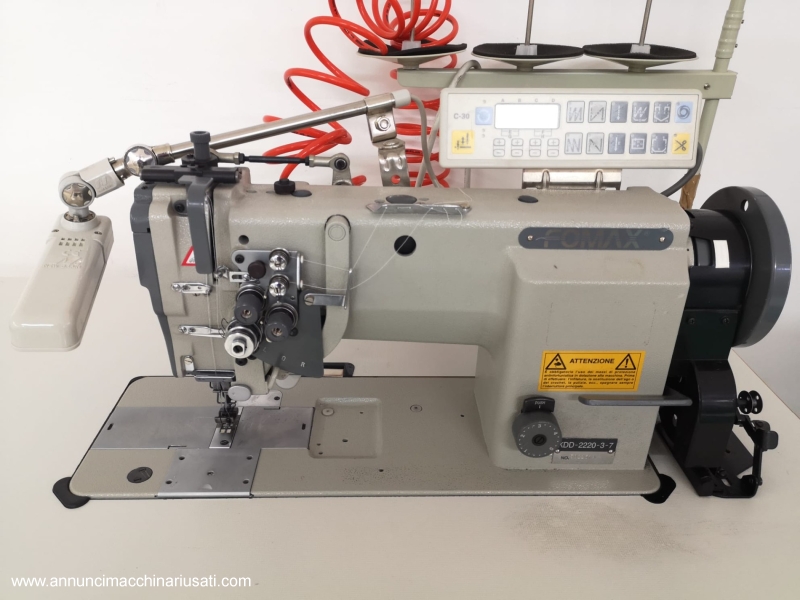
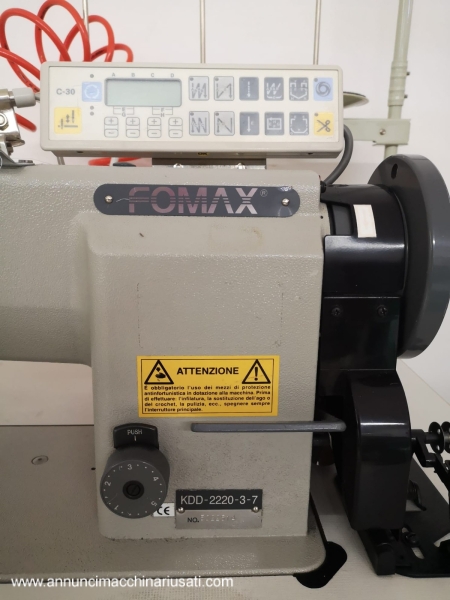
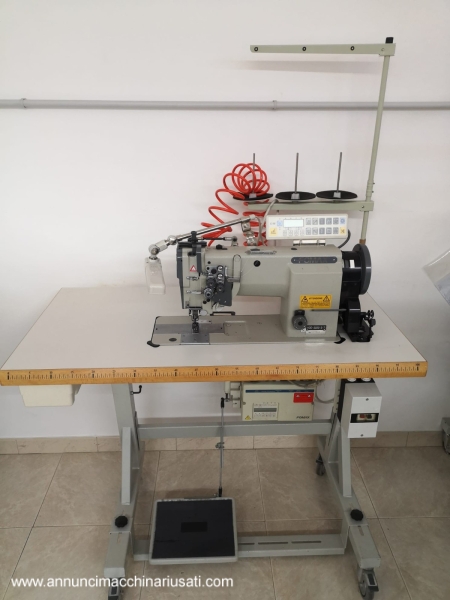
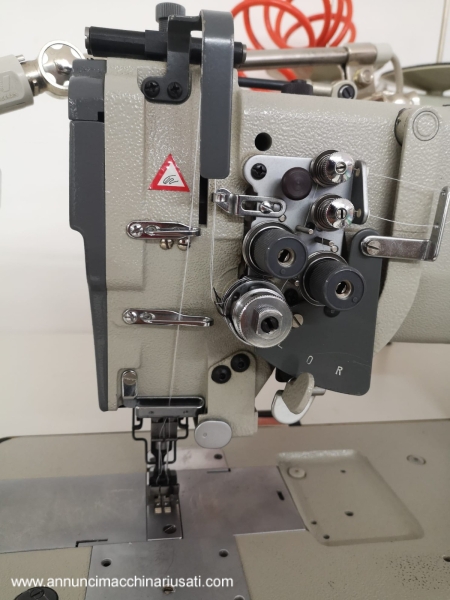
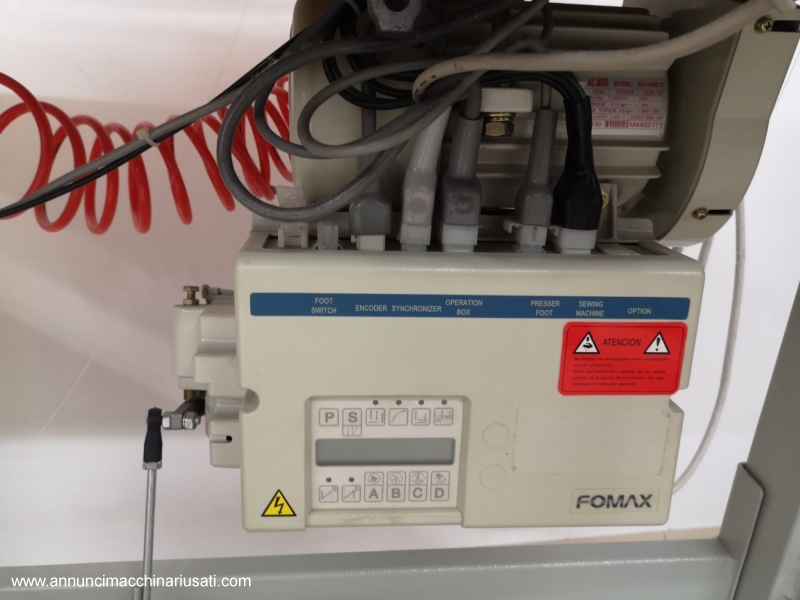
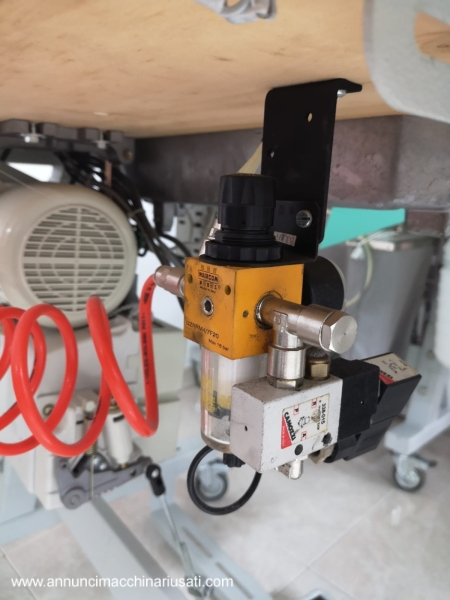
2-needle machine, automatic lubrication mechanism via oil pump and mechanism to disengage the needles for creating corners or closed corners. Equipped with thread cutter and automatic presser foot lift. Sewing speed 2,500 s/min. Equipped with integrated motor and bed.
Used Sewing Machines: Materials, Operation, Types, Advantages, and Convenience of Purchase
#### Materials Used in a Sewing Machine
Sewing machines are designed to work primarily with various types of fabrics, including:
1. **Cotton**: Used for clothing, bed linens, and table linens.
2. **Linen**: Commonly used for tablecloths, towels, and lightweight clothing.
3. **Silk**: Used for elegant clothing and accessories.
4. **Denim**: Used for jeans and durable clothing.
5. **Leather**: Used for high-quality clothing and accessories.
6. **Polyester**: Commonly used for sportswear and home textiles.
#### How a Sewing Machine Works
A sewing machine is a machine that uses a needle and thread to join pieces of fabric together. Here are the main components and how it works:
1. **Needle**: Passes through the fabric to form stitches.
2. **Thread**: Forms stitches and holds pieces of fabric together.
3. **Bobbin**: Contains the lower thread that intertwines with the upper thread during sewing.
4. **Foot pedal or button**: Controls the speed of the machine.
5. **Fabric guide**: Holds the fabric in place while sewing.
6. **Regulator dial**: Adjusts the stitch length and width.
7. **Motor**: Provides the power to run the machine.
During the operation, the fabric is placed under the needle and the machine is activated. The needle moves up and down, passing through the fabric while the upper thread is pulled by the movement of the needle. The lower thread is fed from the bobbin and intertwines with the upper thread, forming the stitches.
#### Types of Sewing Machines
1. **Home sewing machine**: Designed for home and hobby use, it can handle a variety of light to medium fabrics.
2. **Industrial sewing machine**: Designed for heavy-duty use in manufacturing environments, it can sew heavy fabrics such as denim and leather.
3. **Specialty sewing machine**: Designed for specific applications such as embroidery, quilting, or automated sewing.
#### Advantages of a Used Sewing Machine
1. **Cost savings**: Buying a used sewing machine is generally less expensive than buying a new one.
2. **Reduced depreciation**: Used sewing machines have already suffered most of their initial depreciation, keeping their value more stable.
3. **Access to high-quality models**: You can afford high-end models that might be out of your budget if purchased new.
4. **Immediate availability**: Used machines are often available immediately, with no waiting for production or delivery.
5. **Durability**: Sewing machines are built to last. A well-maintained machine can function effectively for many years.
6. **Environmental sustainability**: Buying used reduces waste and promotes more sustainable use of resources.
#### Considerations for Buying a Used Sewing Machine
- **Machine Condition**: Check the overall condition of the machine, including the needle, bobbin, motor, and overall functionality.
- **Maintenance History**: Ask about previous use and maintenance.
- **Functional Tests**: If possible, test the machine to ensure it functions properly and has no mechanical issues.
- **Material Compatibility**: Make sure the sewing machine is suitable for the types of fabric you intend to work with.
- **Brand and Model**: Some brands and models are known for their durability and ease of repair. Research the available models and choose those with a good reputation.
Buying a used sewing machine can be a beneficial choice, allowing you to obtain a high-quality appliance at a reduced price and contributing to greater environmental sustainability.