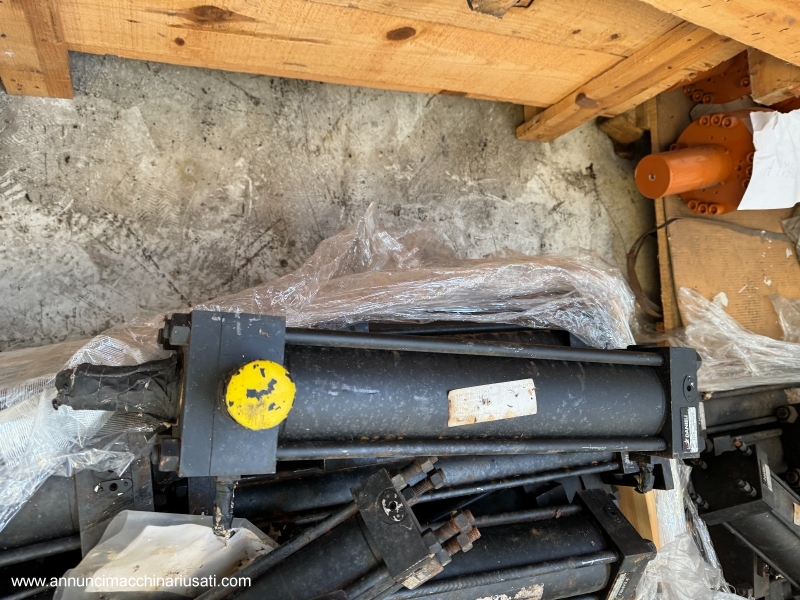
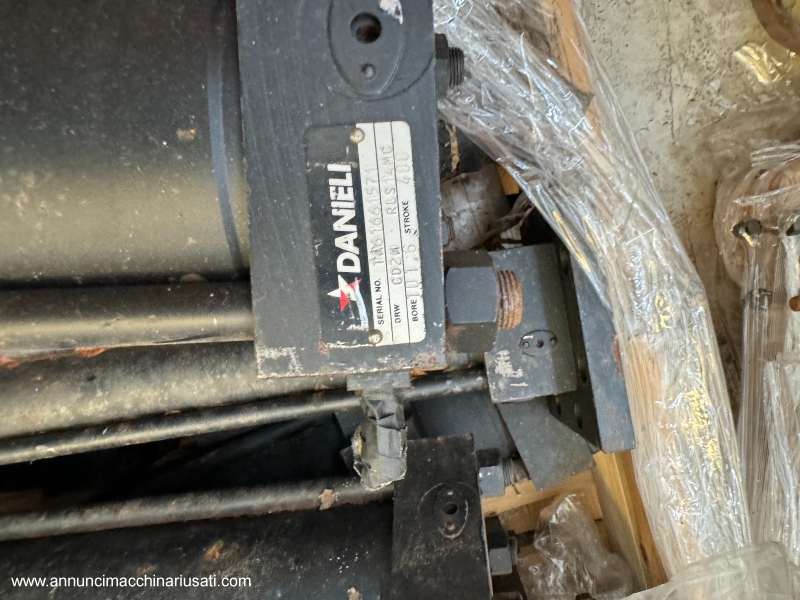
A hydraulic cylinder with a 101.6 mm bore and 400 mm stroke is a critical component in many industrial applications. It is typically made of high-strength steel, with elastomer seals that ensure sealing and reduce friction. Cylinder dimensions are essential for determining its mechanical characteristics, such as the force generated, which depends on hydraulic pressure and piston area.
Formula for calculating force:
The formula to calculate the force generated is:
F=P×AF = P \times AF=P×A
Where:
- P is the pressure in Pascal (Pa)
- A is the area of the piston, which can be calculated as:
A=π×(d/2)2A = \pi \times (d/2)^2A=π×(d/2)2
For a bore of 101.6 mm (0.1016 m), the area will be:
A=π×(0.0508)2≈0.0081 m2A = \pi \times (0.0508)^2 \approx 0.0081 \, m^2A=π×(0,0508)2≈0,0081m2
If we assume an operating pressure of 100 bar (10 MPa):
F=10×106×0.0081=81.000 NF = 10 \times 10^6 \times 0.0081 = 81.000 \, NF=10×106×0,0081=81,000N
Areas of Use:
These hydraulic cylinders are used in sectors such as logistics, industrial machine construction, and agriculture, where high forces are required for lifting, compressing, or moving.
Advantages of buying in stock:
Purchasing hydraulic cylinders ready for delivery from stock is a beneficial choice as it reduces downtime in the event of a breakdown, allowing for quick replacement and minimizing plant downtime.
Manufacturer's Description:
Hydraulic cylinder manufacturers such as Bosch Rexroth, Parker Hannifin, and Caterpillar are known for their reliability and quality in the industry. They offer robust and durable solutions for demanding work environments, with a wide range of configurations to meet the needs of different industries