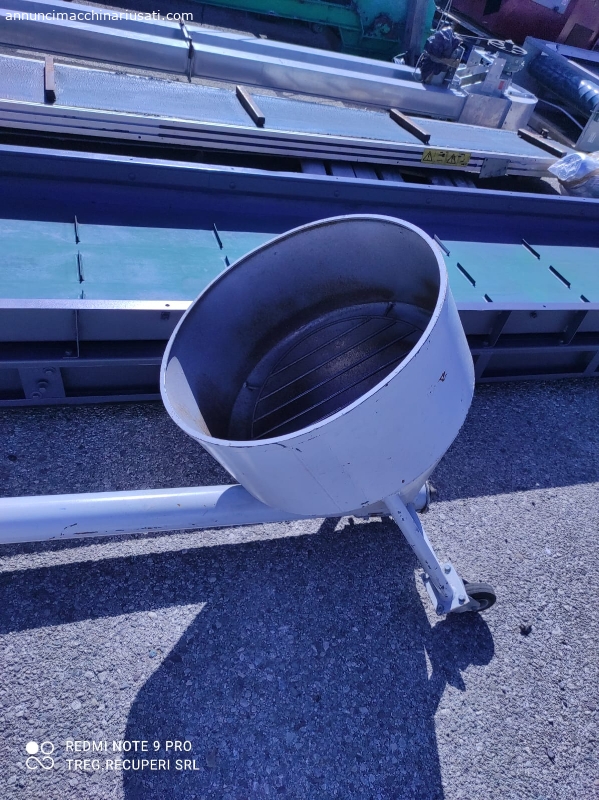
Used Auger
General Description
The auger in question is a versatile tool, particularly useful for transferring and lifting granular and powdery materials. This specific model stands out for its 8000 mm length and 100 mm width, and is equipped with wheels for easy movement.
Appearance and Structure
The auger used is a long cylindrical tube, often made of steel, designed to facilitate the transport of materials. Its structure is simple but effective:
- Material: Typically stainless steel or carbon steel treated to resist corrosion and wear.
- Length: 8000 mm (8 meters), which allows the transport of materials over long distances.
- Width: 100 mm, suitable for moving materials with a moderate grain size.
- Wheels: Equipped with wheels for easy movement and positioning, facilitating transport and installation in different work locations.
Main Components
- Auger Body: The cylindrical tube inside which the auger is inserted. This body is designed to accommodate the auger and provide a continuous path for the materials.
- Propeller: Rotating component that moves materials along the length of the auger. Made of durable steel, the propeller is designed to resist abrasion and ensure a consistent flow.
- Wheels: Positioned at the base of the auger to facilitate moving and aligning the machine.
- Engine: Drives the propeller and can vary in power depending on specifications, adjustable to suit operational needs.
Mechanical Features
- Tube Diameter: Varies depending on the specific model, but is generally designed to accommodate different carrying needs.
- Rotation Speed: Adjustable based on material type and flow rate. Typical speeds range from 20 to 60 rpm.
- Conveying Capacity: Depends on the width and diameter of the pipe. For a 100 mm diameter, capacity may vary depending on speed and material type.
Use and Operating Procedure
-
Installation:
- Place the auger in a stable position. Make sure the wheels are locked to prevent unwanted movement during use.
- Connect the motor to the electrical power source or intended drive system.
-
Load:
- Load the materials into the auger head. The hopper, if present, will help direct the materials toward the auger head.
-
Startup and Adjustment:
- Start the engine and adjust the propeller rotation speed based on the type of material and desired flow rate. Monitor the material flow to ensure uniform transfer.
-
Monitoring:
- During operation, regularly check the auger's operation to avoid blockages or malfunctions. Ensure that the material flows smoothly.
Accessories and Matching Options
To optimize the use of the used auger, you can consider the following accessories:
- Level and Flow Sensors: Monitor and regulate the quantity of material transported, improving efficiency.
- Supports and Fixtures: To ensure correct installation and support of the auger.
- Cleaning Systems: To keep the auger free of residues and dust.
Formulas and Parameters for Optimal Use
To calculate the optimal usage parameters of the used auger, the following formulas can be used:
-
Carrying Capacity (Q):
Q=π×D2×V×n4Q = \frac{\pi \times D^2 \times V \times n}{4}Q=4π×D2×V×n
where QQQ is the conveying capacity (m³/h), DDD is the diameter of the auger (m), VVV is the feed speed (m/s), and nnn is the number of revolutions per minute.
-
Rotation Speed: Adjustable to optimize flow rate and efficiency. It is essential to balance the speed to avoid excessive abrasion or clogging.
Workable Materials
The auger used is designed to treat:
- Granules and Powders: Suitable for materials such as cereals, plastic granules, industrial powders and other similar materials.
Maintenance and Evaluation of the Condition of Used Vehicles
To ensure the proper functioning of the used auger:
- Visual Inspection: Check for any signs of wear, corrosion, or structural damage. The propeller and tube parts must be free of cracks or deformations.
- Lubrication: Ensure regular lubrication of moving parts to prevent wear.
- Cleaning: Remove debris and dust to keep the auger efficient and prevent malfunctions.
Identifying a Good Used Item:
- General Condition: Check that the car shows no signs of serious damage and that the wheels are in good condition.
- Operation: Make sure the auger operates without strange noises and that the flow of materials is smooth.
- Documentation: Request maintenance history and verify whether the machine has been regularly maintained.
Sectors of Use and Advantages of Buying Used
The used auger finds application in various sectors:
- Food Industry: For the transport and elevation of food granules.
- Chemical and Pharmaceutical Industry: For handling chemical and pharmaceutical powders and granules.
Advantages of Buying Used:
- Economical: The cost of a used auger is generally lower than a new one, offering good savings.
- Reliability: If properly maintained, a used auger can continue to provide excellent performance.
- Sustainability: Buying used contributes to a more responsible use of resources and reduces waste.
In short, the used screw conveyor , 8000 mm long and 100 mm wide, complete with wheels, is an efficient and versatile piece of equipment for conveying granular and powdery materials. With proper maintenance and inspection, a used screw conveyor can offer excellent value for money and continue to serve effectively in industrial applications.