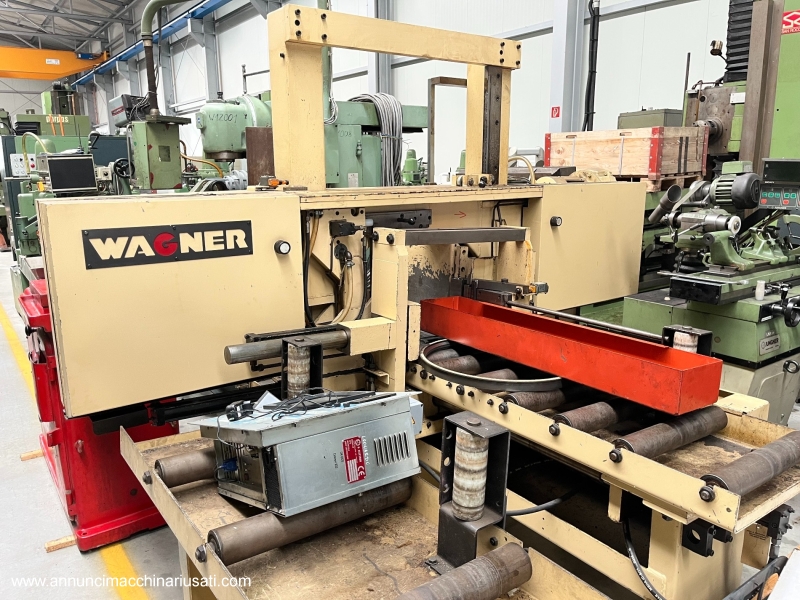
A band saw is a machine tool used to cut metal, especially iron, using a toothed band blade that slides continuously between two wheels. It's a popular choice in industrial and craft settings due to its precision, versatility, and ability to make clean, precise cuts on metal pieces of various sizes and thicknesses.
What is it for?
The band saw is used to cut bars, pipes, profiles, and other metal pieces precisely and at specific angles. It is used in industries such as metalworking, manufacturing, construction, and machinery maintenance.
How to use it
To use a band saw for metal correctly:
- Preparation: Place the piece to be cut on the input roller conveyor, making sure it is securely fastened.
- Adjustment: Adjust the height and angle of the blade to the desired cut.
- Start: Turn on the machine and wait for the blade to reach the correct speed.
- Cutting: Feed the piece forward carefully, using the roller conveyor for a smooth, even motion.
- Shutdown: After cutting, turn off the machine and wait for the blade to come to a complete stop before removing the workpiece.
Materials used
Band saws for metal primarily use high-speed steel (HSS) or bimetallic steel blades, which are designed to withstand the high temperatures generated by cutting metal and maintain their sharpness.
Types of band saws for iron
- Vertical band saws: Mainly used for shaped cuts and work on large pieces.
- Horizontal Band Saws: Preferred for straight cuts on bar and pipe.
- Semi-automatic band saws: They offer greater control and are ideal for small and medium-scale production.
- Automatic band saws: Used in industrial contexts for mass production, where speed and precision are essential.
Maintenance of a used band saw
To keep a used band saw in good condition:
- Regular cleaning: Remove metal residue and dust after each use.
- Lubrication: Make sure moving parts are well lubricated to avoid friction and premature wear.
- Blade Check: Check the condition of the blade and replace it if it shows signs of excessive wear or breakage.
- Check blade tension: Make sure the blade is properly tensioned to avoid vibrations and inaccurate cuts.
- Wheel Inspection: Check that the wheels the blade runs on are in good condition and well aligned.
Checking the condition of a used band saw
Before buying a used band saw, check:
- Structural integrity: Check for cracks or structural damage.
- Blade Operation: Turn on the machine and check the smoothness of the blade movement.
- Roller conveyor status: Verify that the input and output roller conveyor is intact and functioning properly.
- Blade Check: Inspect the blade for any signs of excessive wear.
- Check the bearings: Make sure the bearings are not making any strange noises and that they spin freely.
- Electrical panel: Check the status of the electrical panel, verifying that the controls respond correctly.
Why you should buy a used band saw
Buying a used band saw, such as the Wagner Model 340, offers several advantages:
- Lower cost: The price of a used car is generally much lower than a new one.
- Reliability of well-maintained machines: If properly maintained, used band saws can last for many years and perform similarly to new ones.
- Immediate availability: Used machines are often available immediately, without the waiting time required to order and produce a new machine.
- Included Accessories: Used models may be sold with included accessories, such as infeed and outfeed roller conveyors, which improve work efficiency.
I hope this information helps you better understand the features and benefits of purchasing a used metal band saw, particularly the Wagner 340 model.