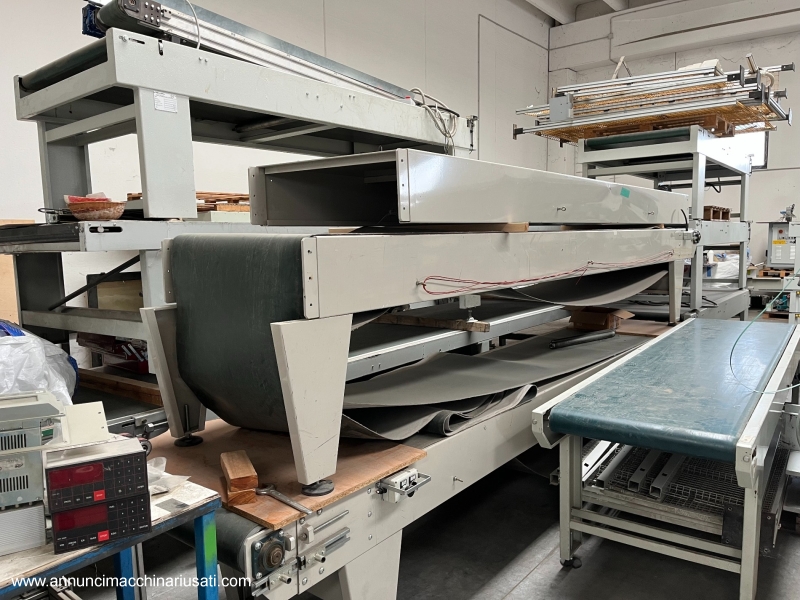
I'm selling used sliding belt conveyor. This highly versatile machine is widely used in various industrial sectors, primarily for transporting bulk materials or finished products within a production line. There are several variations of this machine, with lengths ranging from 3 to 6 meters, while the width of the sliding belt can vary from 600 to 1200 mm. The belt itself is made of wear-resistant materials, typically PVC or rubber, to ensure long life and durability.
Appearance and Components
Visually, a conveyor belt of this type appears as a solid, elongated structure, consisting of a metal base, often made of galvanized or painted steel, which supports the sliding belt. The lower part is equipped with adjustable feet, which allow the belt to be positioned on surfaces that are not perfectly level. The heart of the system is the electric motor, which drives the belt, and a set of rollers on which the belt slides. The sturdiness of the sliding belt is essential to withstand the weight of the materials being transported.
Mechanical Features
The electric motor, usually three-phase, powers the belt. Motor power can vary depending on the length of the belt and the type of materials to be conveyed. Rollers, located at the beginning and end of the belt, guide the conveyor, ensuring continuous, smooth movement. The belt speed can be adjusted, usually via an inverter, to adapt to specific production needs.
Procedure for Use
The conveyor belt is extremely intuitive to use. Once the machine is aligned with the rest of the production system, the belt is started via a control panel. Here, the operator can adjust the speed and monitor the system's operation. Materials are loaded manually or automatically at the beginning of the belt and transported along the route to their final destination.
Accessories and Customizations
Used conveyor belts can be equipped with various accessories to adapt to specific production needs. Some examples include side guides to prevent material from falling, dust covers, or separators for product sorting. Furthermore, the control system can be upgraded with sensors for automated material flow management.
Formulas for Optimal Use
To ensure the efficiency of a conveyor belt, it is essential to calculate the correct speed-to-load ratio. The basic formula for calculating the optimal belt speed is:
v=Pρ⋅Av = \frac{P}{\rho \cdot A}v=ρ⋅AP
Where:
- v is the speed of the belt (m/s),
- P is the engine power (W),
- ρ is the density of the transported material (kg/m³),
- A is the area of the tape (m²).
Transportable Materials
This type of belt can transport a variety of materials, including loose materials like sand, gravel, grain, or packaged and packaged products. Thanks to its versatility, it is also used for sorting and transporting lightweight materials in various industrial sectors.
Maintenance and Safety
Maintenance of a sliding conveyor belt requires regular checks of the belt and rollers. The belt must be cleaned frequently to prevent the accumulation of materials that could compromise its operation. Furthermore, the belt tension must be periodically checked and adjusted. Regarding safety, if the belt is not CE, additional protections, such as safety barriers or emergency buttons, will need to be installed to comply with current regulations.
How to Evaluate a Good Used Car
To determine if a used conveyor belt is of good quality, it's essential to check the belt itself for wear, the condition of the rollers, and the functionality of the motor. Another crucial element is the control system: if the control panel is up to date and in perfect working order, it's a good sign of regular maintenance.
Sectors of Use and Advantages of Buying Used
Slip-type conveyor belts are widely used in the food, construction, recycling, and many other industries where materials need to be transported from one point to another. Purchasing a used conveyor belt offers significant financial advantages. Properly maintained, this type of machine can continue to operate efficiently for many years, reducing purchase costs and paying for the investment more quickly.
PRICE ON REQUEST.