Description
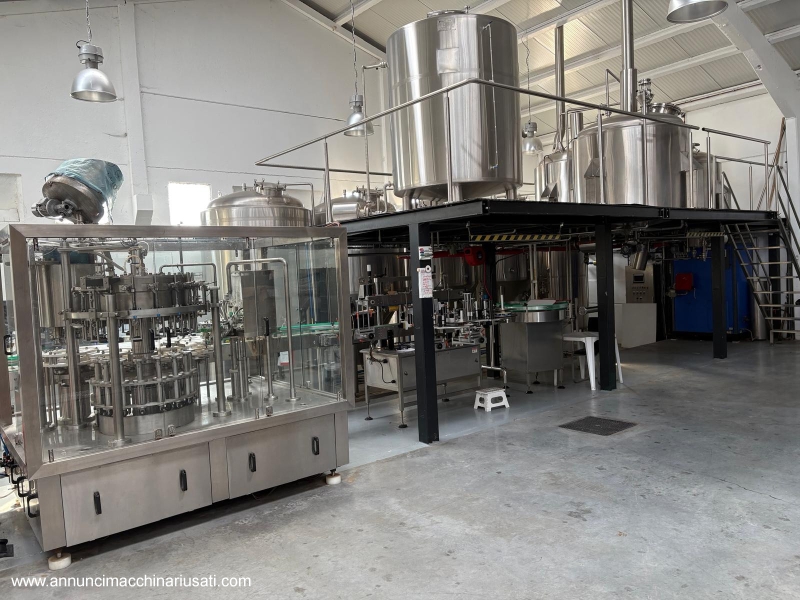
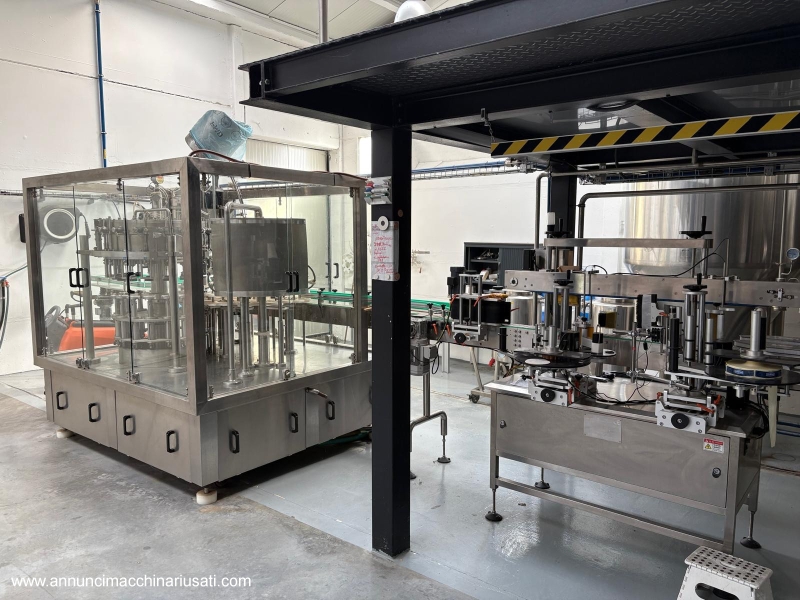
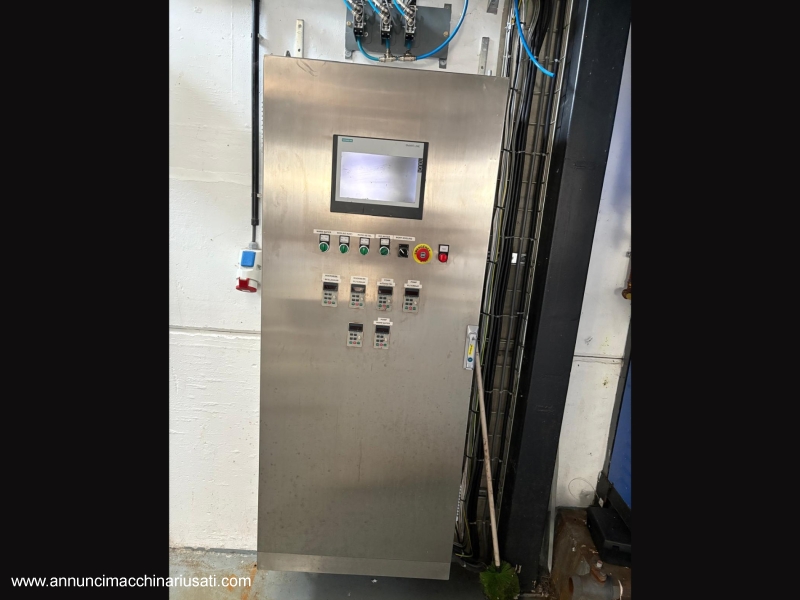
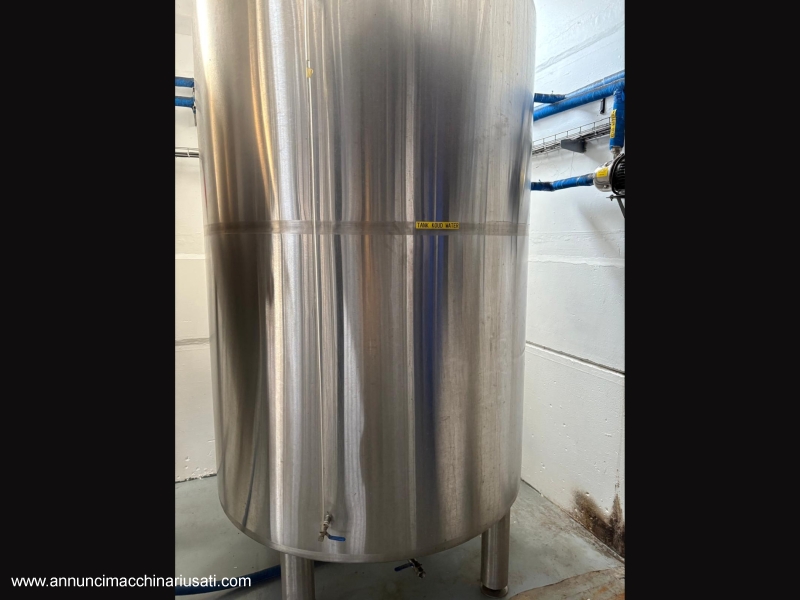
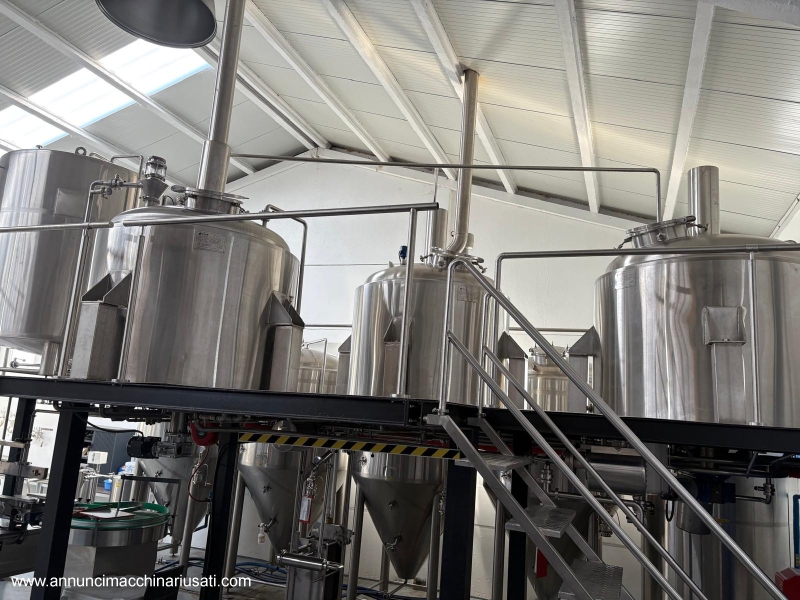
Used HG Machinery Beer Production and Filling Line 800 kg/hour The used HG Machinery 800 kg/hour beer production and filling line offers precise, hygienic, and continuous beer production and bottling. With a nominal capacity of 800 kilograms per hour, this system is the ideal solution for craft and semi-industrial breweries. It also integrates advanced features to ensure consistent quality. Grinding and Mashing System This beer production line includes a double-roller malt mill that processes 500 to 800 kilograms per hour. HG Machinery manufactured the unit from stainless steel and equipped it with a 3.5-kilowatt motor. Additionally, the adjustable width of the rollers ensures efficient malt crushing. As a result, the design reduces noise and dust, significantly improving working conditions. The mash tun and lauter tun each provide 1,500 liters of usable capacity, with a gross capacity of 1,875 liters. Engineers constructed them from AISI 304 stainless steel and insulated them with 80 millimeters of rock wool. As a result, the tanks maintain excellent thermal stability. Technicians polished the internal surfaces to a roughness of Ra 0.4 micrometers. Each vessel uses PT100 temperature sensors, frequency-controlled mixers, and integrated CIP devices. Therefore, they manage thermal and cleaning processes with high efficiency. Boiling and hot water systems The boiling and whirlpool tank is equipped with steam heating and a heat exchange surface of 2 square meters. It manages a heating rate of 1.5 degrees Celsius per minute and ensures effective wort circulation with a tangential inlet and sloping bottom. Furthermore, this configuration supports rapid and uniform heating. The hot water tank has a working volume of 3,000 liters and also uses steam to maintain optimal process temperatures. This system ensures reliable wort preparation and hygiene. Fermentation and Refrigeration: The used HG Machinery 800 kg/hour beer production and filling line comprises four 3,000-liter conical fermenters. Each fermenter uses dual-zone glycol cooling and 80 mm polyurethane insulation. The system maintains pressures up to 0.3 megapascals. Technicians polish the internal walls to a Ra of 0.4 micrometers to ensure hygienic conditions. Similarly, the 10-liter yeast tank connects to the heat exchanger and wort line using sterile-grade fittings. The refrigeration unit uses a 3,000-liter glycol tank and a 10-horsepower cooling unit with a SANYO vortex compressor. Specifically, it offers stable performance when using R134a refrigerant. A stainless steel booster pump supports the cooling cycle. As a result, fermentation temperatures remain constant throughout the batch. CIP and Control Systems The CIP system includes 200-liter stainless steel tanks and a 20 cubic meter per hour high-pressure pump. Together with the cleaning tanks, this configuration ensures proper sanitization of all process lines. Operators control the entire line using a Siemens PLC, a touchscreen interface, and separate control circuits for each process area: mashing, fermentation, cooling, and cleaning. As a result, the operator can fine-tune each function. Bottling Line The used HG Machinery 800 kg/hour beer production and filling line is equipped with a fully automatic 3-in-1 monoblock for rinsing, filling, and capping glass bottles. The HG-CGF16/16/6 model operates with 16 rinsing heads, 16 filling heads, and 6 capping heads. Specifically, it uses isobaric filling with double CO2 evacuation to reduce oxygen and extend shelf life. Thanks to this technology, the final product maintains freshness and stability. The system fills up to 2,000 bottles per hour, handling bottles from 105 to 350 mm in height and necks from 50 to 84 mm in diameter. Furthermore, the monoblock includes an emergency stop system and pre-evacuation mechanisms to protect both operators and the product. Before capping, the machine injects CO2 to displace oxygen, reducing oxidation. Ceramic capping rings then prevent damage to the bottle necks. Meanwhile, a sensor-based mechanism ensures that no filling occurs without a bottle present, avoiding waste. Conclusion The used HG Machinery 800 kg/hour beer production and filling line offers a complete, efficient, and reliable solution for beer production and bottling. Integrating automation, isobaric filling, and CIP systems, the line guarantees high standards of hygiene and performance. Ultimately, breweries installing this line benefit from minimal downtime, high adaptability, and consistent results.