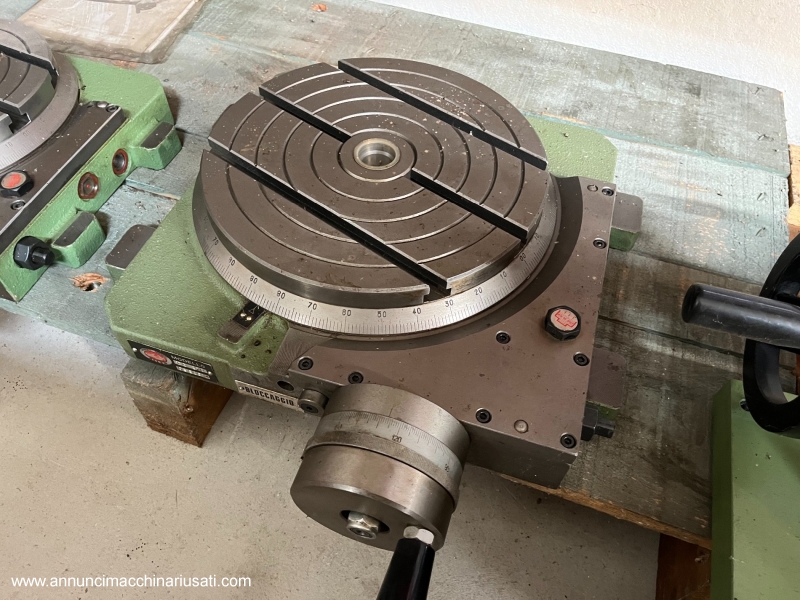
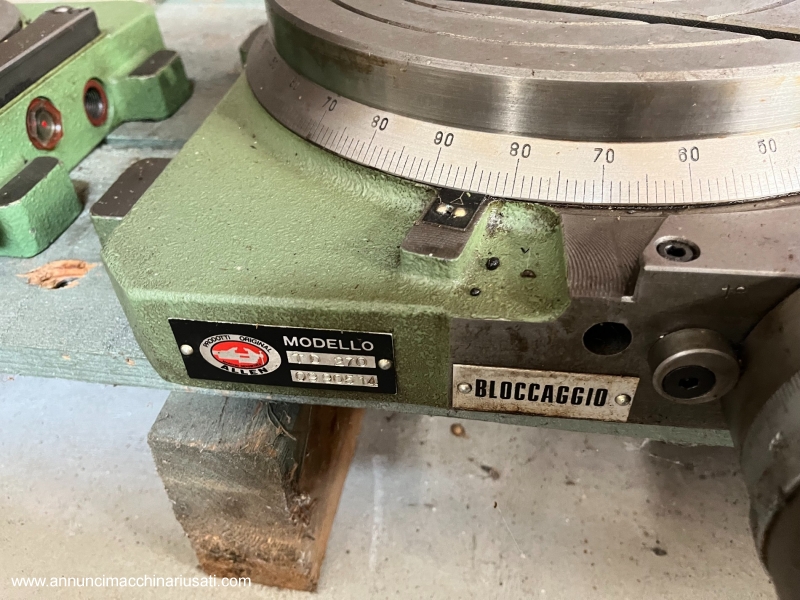
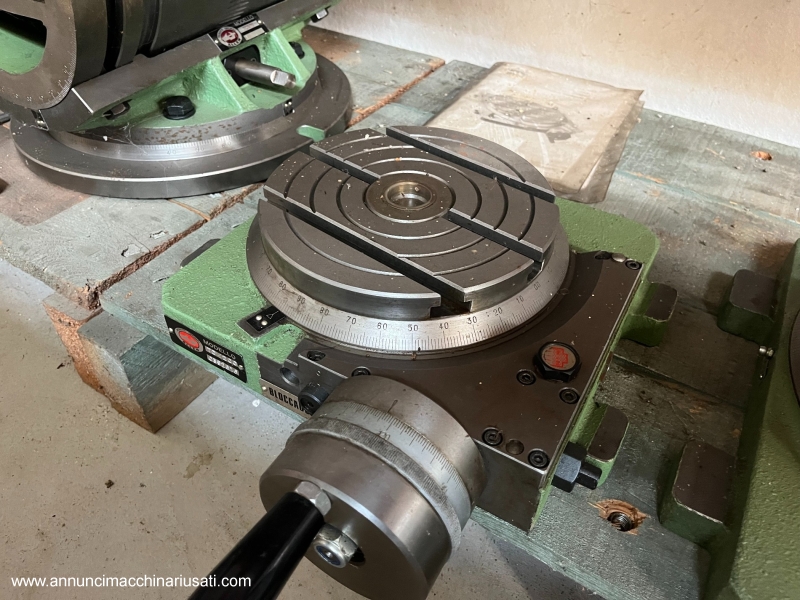
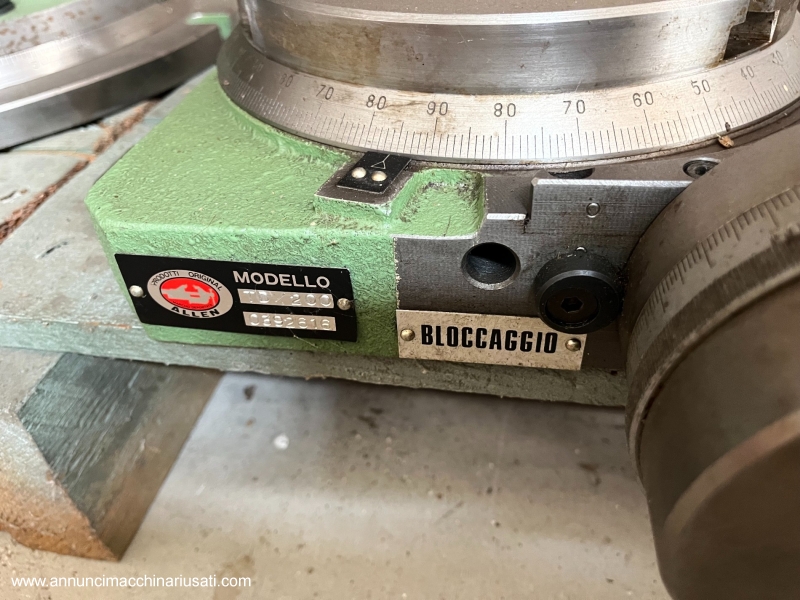
MACHINE TOOL ACCESSORIES FOR SALE. ALLEN TD 270. ALLEN TD 200. PRICE ON REQUEST.
Technical Data Sheet Accessories for Allen TD 270 and TD 200 Machine Tools
The Allen TD 270 and TD 200 accessories are designed to enhance the functionality and versatility of machine tools, supporting precision operations and increasing productivity in workshops and laboratories. Below you'll find a detailed description of both models as used machines, including components, technical specifications, and maintenance practices.
1. Allen TD 270 accessory
1.1 General Description
The Allen TD 270 accessory is a tool designed for machine tools, intended to improve machining capacity and precision. It could be a chuck, a precision vise, or other specific equipment. Since it is used, it is essential to check for wear and proper operation.
1.2 Main Components
-
Structural Body: Made of steel or cast iron, it provides a sturdy base for the accessory. Cast iron is often used to absorb vibrations and ensure stability.
-
Chuck or Clamping Mechanism: Central part of the accessory, designed to mount and secure tools or workpieces.
-
Adjustment Systems: Includes cranks, adjustment screws, or levers to change the position and angle of the accessory.
-
Supports and Guides: Elements that ensure precise movement and positioning of the accessory on the machine tool.
1.3 Dimensions and Technical Specifications
-
Overall Dimensions: These vary depending on the specific model, but typically they can have a length of around 300-500 mm, a width of 150-250 mm and a height of 100-200 mm.
-
Weight: Usually between 10 and 50 kg, depending on size and material.
-
Machining Accuracy: The accuracy can be in the order of ±0.01mm, ensuring high precision machining.
1.4 Mechanical Characteristics
-
Adjustment System: Equipped with mechanisms to adjust position and angle. Some models have micrometric adjustments for even greater precision.
-
Robustness and Stability: Designed to withstand high loads and vibrations during machining, thanks to the robustness of the materials used.
1.5 Optimal Usage Parameters
-
Clamping Force: Can be calculated as:
F=T×d2F = \frac{T \times d}{2}F=2T×d
where TTT is the applied torque and ddd is the diameter of the tightening screw.
-
Positioning Accuracy: Accuracy is verified through calibration. Use measuring tools such as micrometers and calipers to confirm accuracy.
1.6 Workable Materials
The Allen TD 270 accessory can be used to work with materials such as:
- Ferrous Metals: Steel, cast iron.
- Non-Ferrous Metals: Aluminum, Copper.
- Composite Materials: Plastics and synthetic materials.
1.7 Maintenance
-
Cleaning: Keep the accessory free of chips and debris. Use a brush and protective oil to prevent rust.
-
Lubrication: Lubricate screws and moving parts regularly to maintain smooth operation.
-
Accuracy Check: Periodically check the accuracy and alignment of the accessory. Make adjustments if necessary.
-
Parts Inspection: Check the condition of wearing parts and replace any damaged components.
1.8 How to Evaluate a Good Used Item
-
General Condition: Examine the body of the accessory for any visible damage such as cracks or wear.
-
Functionality: Test the adjustment mechanism and fastening system to ensure they work properly.
-
Wear of Parts: Check the condition of moving and adjusting parts.
-
Manufacturing Accuracy: Conduct tests to ensure the accessory maintains the stated accuracy.
1.9 Areas of Use
- Mechanical Workshops: To improve the machining capabilities of machine tools.
- Precision Laboratories: For operations requiring a high degree of precision.
- Manufacturing Industries: For the assembly and processing of parts and components.
1.10 Why It's Worth Buying Used
-
Lower Cost: The price of a used accessory is significantly lower than a new one.
-
Reliability: If well maintained, a used accessory from a reputable brand can guarantee excellent performance.
-
Repair Possibility: Initial savings can be invested in any repairs or upgrades.
2. Allen TD 200 accessory
2.1 General Description
The Allen TD 200 attachment is another tool designed for machine tools, similar to the TD 270 but with different specifications. It could be a vise, a chuck, or another type of precision tool.
2.2 Main Components
-
Structural Body: Constructed of steel or cast iron, it provides strength and stability.
-
Chuck or Clamping Mechanism: For mounting and securing tools or workpieces.
-
Adjustment Systems: Includes cranks, adjustment screws, or levers for precise positioning.
-
Supports and Guides: To ensure precise and stable movement.
2.3 Dimensions and Technical Specifications
-
General Dimensions: Typically between 200 and 400 mm in length, 100 and 200 mm in width and 100 and 200 mm in height.
-
Weight: Usually between 10 and 50 kg, depending on size and material.
-
Machining Accuracy: Generally ±0.01mm.
2.4 Mechanical Characteristics
-
Tightening System: Trapezoidal screw or rack mechanism, for precise adjustment.
-
Stability and Robustness: Durable materials and robust design to reduce vibration and improve accuracy.
2.5 Optimal Usage Parameters
2.6 Workable Materials
- Ferrous Metals: Steel, cast iron.
- Non-Ferrous Metals: Aluminum, Copper.
- Composite Materials: Plastics and synthetic materials.
2.7 Maintenance
-
Cleaning: Remove chips and debris regularly.
-
Lubrication: Apply oil or grease to moving parts.
-
Accuracy Check: Check and calibrate periodically.
-
Parts Inspection: Replace worn components.
2.8 How to Evaluate a Good Used Item
-
General Condition: Check for damage and wear.
-
Functionality: Test the mechanism and adjustment.
-
Wear of Parts: Check and replace worn parts.
-
Machining Accuracy: Make sure the accuracy of the accessory.
2.9 Areas of Use
- Mechanical Workshops: To improve the machining capacity of machine tools.
- Precision Laboratories: For high precision operations.
- Manufacturing Industries: For assembly and machining of parts.
2.10 Why It's Worth Buying Used
-
Lower Cost: Lower costs compared to buying new.
-
Reliability: Excellent performance if well maintained.
-
Repair Possibility: Initial savings useful for any repairs.