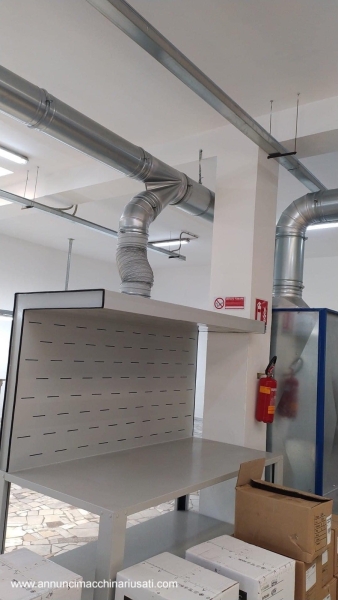
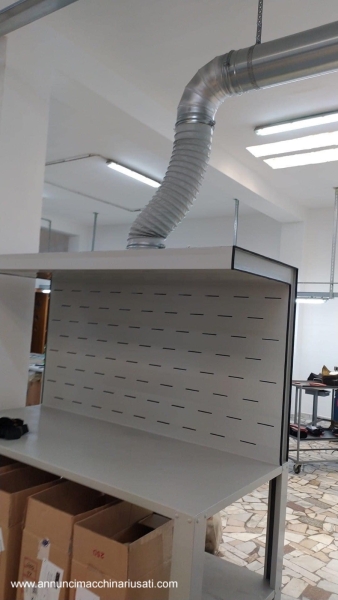
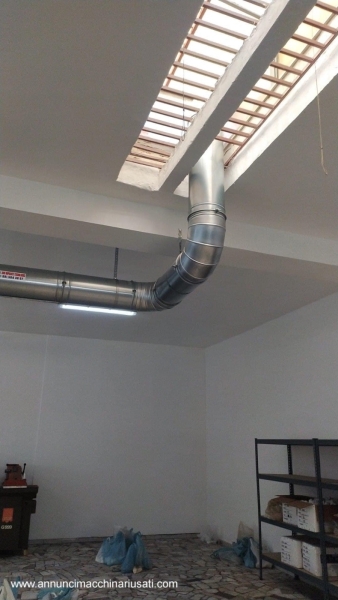
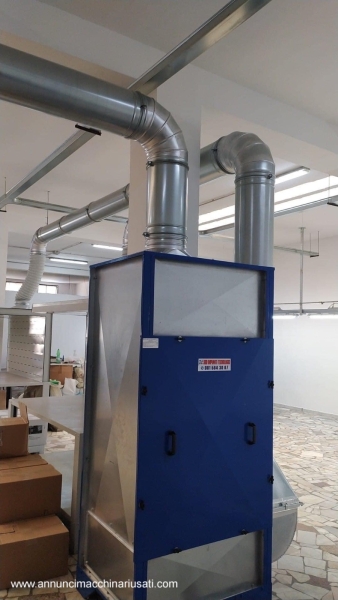
Complete extraction system with workbenches and extractors. The system has never been put into operation due to bureaucratic issues. Built and installed in January 2024. The system is in like-new condition!
**Vacuum benches complete with extraction system** are devices designed to ensure a clean and safe work environment by eliminating dust, fumes, and particles generated during processing. They are particularly useful in sectors such as woodworking, welding, sanding, and other industrial processes that produce hazardous dust or fumes. Let's take a detailed look at how they work, how to use them, the available types, the materials they can handle, the alternatives, and the advantages of purchasing vacuum benches.
## 1. **How Vacuum Benches Work**
### Operating Principle
Vacuum benches work thanks to an integrated extraction system that captures airborne particles directly from the emission source, preventing them from spreading throughout the work environment. Here's how:
1. **Extraction Work Surface**: The bench surface is equipped with grilles or slots that extract contaminated air.
2. **Filtration System**: The extracted air is conveyed through a series of filters (e.g., cartridge filters, bag filters, or activated carbon filters) that trap solid particles, fumes, and harmful substances.
3. **Clean Air Exhaust**: After filtering, the purified air is released into the room or conveyed outside, depending on the system configuration.
4. **Ventilation**: The system is supported by fans that create the airflow necessary for effective extraction.
### Instructions for Use
1. **Preparation**: Turn on the extraction system before starting work to ensure the work environment is free of contaminants.
2. **Material Placement**: Place the material to be worked on the surface of the extraction table. Ensure that the area from which the dust or fumes originate is directly above the extraction grilles.
3. **Work Operation**: Proceed with the desired operation (e.g., sanding, welding, cutting). The system will automatically extract the generated particles.
4. **Cleaning and Maintenance**: After use, turn off the system and clean the filters periodically to maintain system efficiency.
## 2. **Types of Vacuum Benches**
### Based on Application
- **Welding Vacuum Benches**: Specifically designed to capture welding fumes and metal dust.
- **Sanding Vacuum Benches**: Used in processes that generate fine dust, such as sanding wood or metal.
- **Painting Vacuum Benches**: Equipped with special filters to capture paint particles and chemical vapors.
### Based on the Type of Suction
- **Top Extraction**: Air is drawn downward across the work surface. Ideal for light dust and fumes.
- **Side Extraction**: Extraction occurs from the sides of the bench, suitable for fumes and heavy particles that are not easily lifted.
- **Combined Extraction**: Integrates both top and side extraction for more effective contaminant removal.
### Based on the Filtering System
- **Cartridge Filters**: Effective for fine dust particles, they require regular maintenance to maintain effectiveness.
- **Bag Filters**: Ideal for coarse dust, they are easy to empty and replace.
- **Activated Carbon Filters**: Used to remove odors and chemical vapors from the intake air.
## 3. **Materials that can be worked with**
Vacuum benches can handle a wide range of materials, including:
- **Wood**: Dust generated during cutting, sanding, and milling.
- **Metal**: Welding fumes, metal dust, and grinding residues.
- **Composite Materials**: Fine dust produced by processing materials such as fiberglass or carbon.
- **Plastics**: Fumes and dust resulting from cutting, sanding, or milling plastic materials.
- **Paints**: Suspended particles and vapors during the application of paints or solvents.
## 4. **Alternative Machinery**
### Suction Arms
- **Pros**: Greater flexibility, can be positioned directly near the emission source.
- **Cons**: Lower suction capacity than vacuum benches, requires precise positioning.
### Extractor Hoods
- **Pros**: Ideal for operations that produce large amounts of fumes, such as welding.
- **Cons**: Limited capacity for handling heavy dust or materials that are difficult to lift easily.
### Centralized Extraction Systems
- **Pros**: High suction capacity, can serve multiple workstations simultaneously.
- **Cons**: Greater complexity and cost of installation, requires specific design for the work environment.
### Portable Vacuum Cleaners
- **Pros**: Easy to move and use in various work areas.
- **Cons**: Limited suction power, not suitable for intensive or prolonged operations.
## 5. **Why It's Worth Buying Used Vacuum Benches**
### Economic Advantages
- **Cost Savings**: Used vacuum benches cost significantly less than new ones, allowing you to get a quality product at a reduced price.
- **Lower Depreciation**: A used vacuum bench has already suffered most of its depreciation, so its value will remain relatively stable.
### Quality and Reliability
- **Long-lasting**: Vacuum benches are built to last; a well-maintained used model can perform as well as a new one.
- **Technical Support**: Reputable brands offer a wide range of spare parts and technical support, making maintenance easy even for used models.
### Operational Readiness
- **Immediate Availability**: A used vacuum bench is usually available for immediate delivery, without the wait times associated with manufacturing and shipping a new model.
- **Performance Verification**: A used vacuum bench has already demonstrated its reliability and functionality in a real-world environment, reducing the risk of unexpected problems.
### Environmental Sustainability
- **Reuse**: Purchasing a used vacuum bench helps reduce industrial waste and save resources, promoting a more sustainable approach to equipment purchasing.
In summary, vacuum benches complete with extraction systems represent an effective solution for maintaining a safe and clean work environment, offering significant advantages, especially when purchased used, thanks to lower costs and immediate availability without compromising quality or operational efficiency.