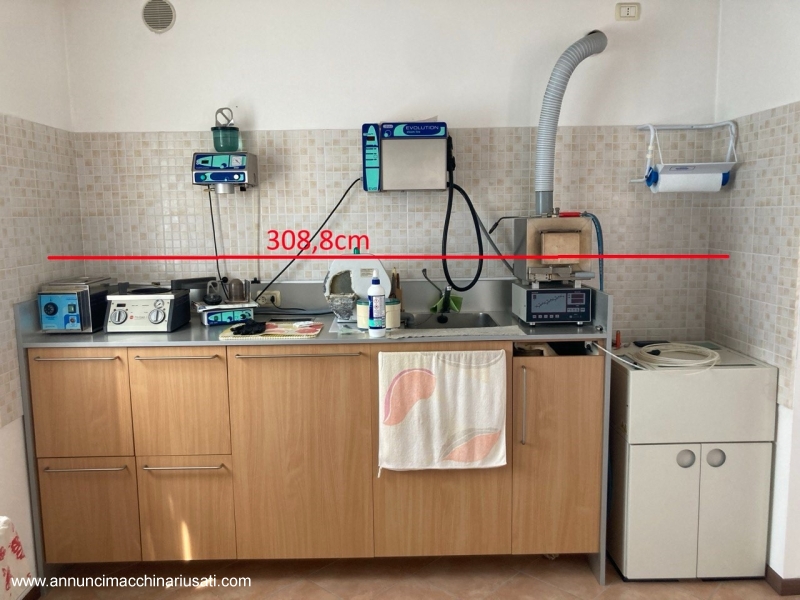
A dental workbench, such as a cast bench with sink, is an essential component of a dental laboratory. This type of bench is designed to support delicate work such as preparing plaster models and dental castings, ensuring practicality and cleanliness thanks to the integrated sink.
Construction and Materials
The plaster/casting room bench is made of sturdy steel, often covered with durable materials such as stainless steel for the work surfaces. Stainless steel is ideal for laboratory environments because it resists corrosion, is easy to clean, and ensures optimal hygiene, essential for medical and dental work(
Dental Furniture
)(
Dental Furniture
).
Measurements and Technical Characteristics
Typical dimensions for a dental bench can vary, but a common model like this might be 200 cm wide and 100 cm deep, perfect for accommodating various instruments and materials needed in the laboratory. A built-in sink allows for quick cleaning of materials, and the worktop is often made to withstand the chemicals and products used in preparing dental models.
Components and Accessories
In addition to the sink, dental laboratory benches are often equipped with various drawers and shelves for organizing instruments. They can be paired with special lamps to adequately illuminate the work area and ensure maximum precision in operations. Other accessories include extractor hoods to remove dust or fumes and control panels for operating casting machines(
Dental Furniture
).
Use and Maintenance
Using a plaster cast bench requires careful attention: you begin by preparing the plaster models, pouring the materials into the sink for a quick rinse and cleaning. To keep the bench in top condition, it's essential to clean it regularly with non-abrasive solutions, especially the stainless steel surfaces, to avoid buildup of material residue or permanent stains.
Sectors of Use and Advantages of Used Equipment
These benches are primarily used in dental laboratories for the production of dental prosthetics and models. Purchasing a used dental bench is often a cost-effective option because these structures are designed to last and, with proper maintenance, can guarantee excellent performance even after years of use.