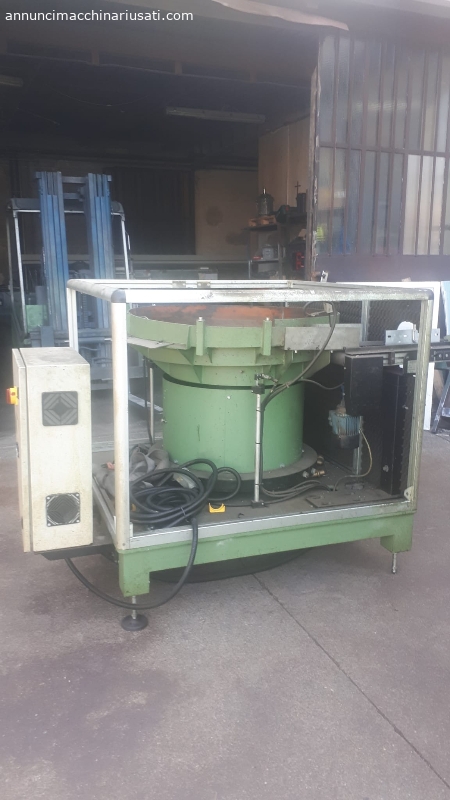
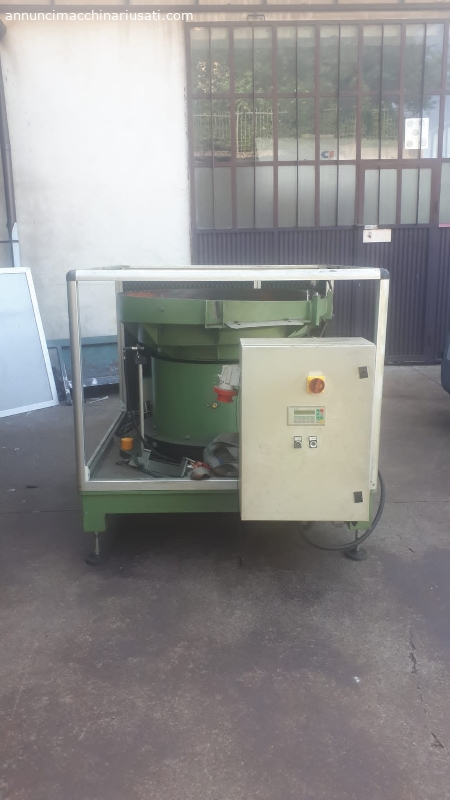
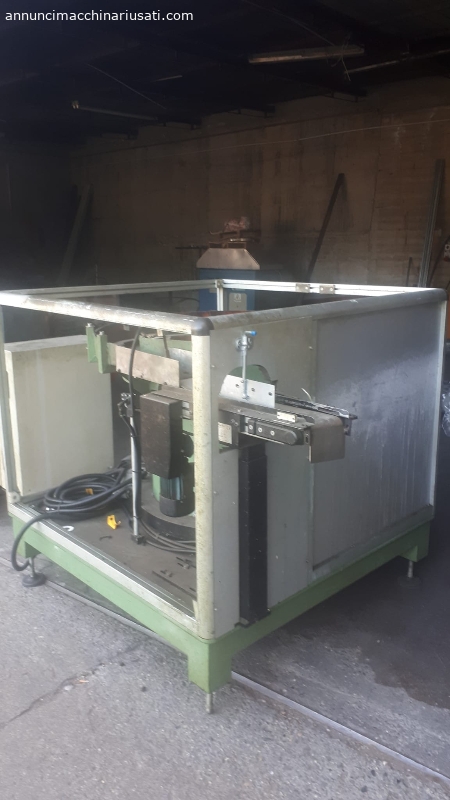
CUP FEEDER Ø100mm H840mm WITH OUTPUT ON THE RIGHT VIEWED FROM BEHIND.
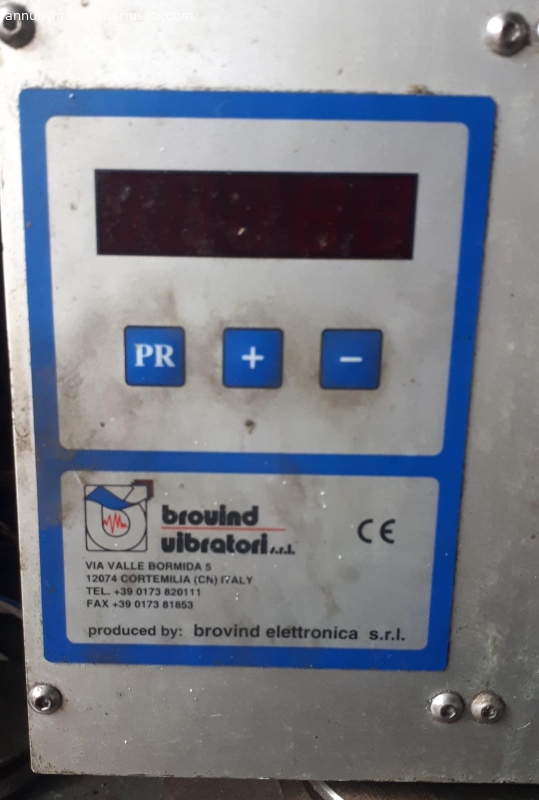
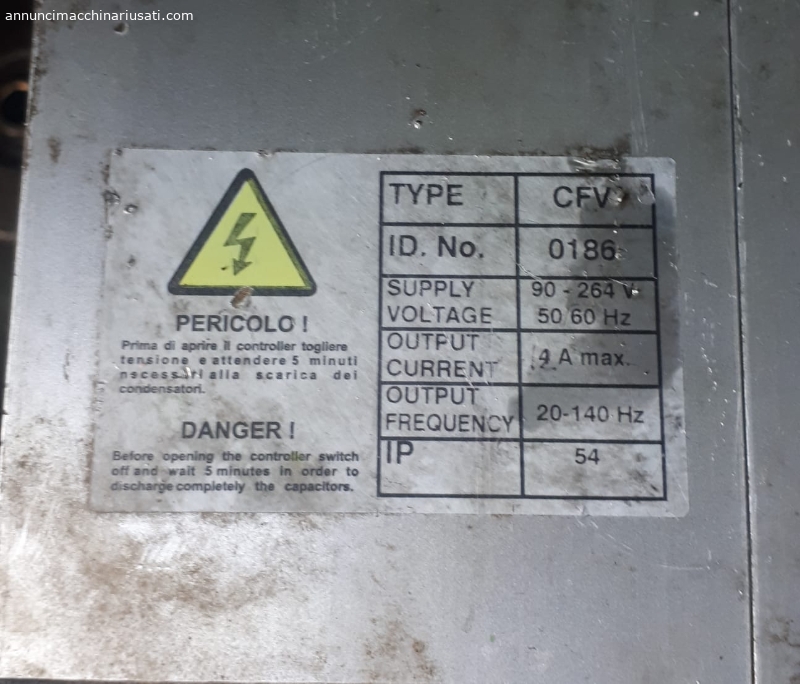
BROVIND CFV CONTROLLER.
Data Sheet: Ø100mm H840mm Cup Feeder with Brovind CFV Controller
1. General Description
A bowl feeder is a feeding device used to orient and distribute small components or workpieces in an automated manufacturing process. The right-hand exit version (viewed from behind) is designed to accommodate specific assembly line configurations.
2. Technical Specifications
- Cup Diameter: Ø100 mm
- Cup Height: 840 mm
- Exit: Right (view from behind)
3. Materials and Construction
- Cup:
- Material: Typically durable plastic (polycarbonate, nylon) or metal (stainless steel for applications requiring greater strength and durability).
- Finish: Smooth surface for easy movement of pieces.
- Support Structure:
- Material: Painted carbon steel or stainless steel.
- Finish: Powder coating or anti-corrosion coating.
- Vibrating Components:
- Vibration Motor: Electromagnets or vibration motors that generate the vibrations needed to orient the workpieces.
4. Mechanical Features
- Vibration System: Generated by electric motors or adjustable electromagnets, it allows you to adapt the intensity and frequency of the vibrations based on the size and type of pieces.
- Orientation and Channeling: Guide mechanisms inside the bowl to ensure that the parts are correctly oriented and directed to the desired exit.
- Height and Configuration: 840mm height to suit standard height assembly lines, with right hand exit for easy positioning in a specific work configuration.
5. CFV Controller Brovind
Brovind's CFV controller is an advanced control device used to manage cup feeder functions, including vibration parameters and part flow.
- CFV Controller Functions:
- Vibration Frequency Adjustment: Allows you to set the vibration frequency according to the process needs.
- Feed Rate Control: Adjusts the speed at which parts are fed through the system.
- Programming: Provides programming options to optimize operations and tailor operation to part specifications.
6. Mathematical Formulas Used
- Vibration Frequency (f): f=1Tf = \frac{1}{T}f=T1
- Where TTT is the period of vibration.
- Vibration Amplitude (A): A=Fm×ω2A = \frac{F}{m \times \omega^2}A=m×ω2F
- Where FFF is the applied force, mmm is the mass of the part, and ω\omegaω is the angular frequency.
- Power Consumption (P): P=V×IP = V \times IP=V×I
- Where VVV is the voltage and III is the current consumed by the vibratory motor.
7. Sectors of Use
- Manufacturing Industry: For the transport and orientation of small parts in assembly lines.
- Electronics Industry: Used to handle electronic components such as resistors, capacitors, and chips.
- Food Industry: Used for the handling of packaging machine components and for the feeding of ingredients.
8. Advantages of Buying Used
- Lower Cost: Used cup feeders are generally less expensive than new ones.
- Immediate Availability: Often available immediately, reducing production lead times.
- Sustainability: Purchasing used equipment contributes to more sustainable resource management and waste reduction.
Additional Considerations
- Condition: It is essential to check the general condition of the device used, including the condition of the cup, vibration motor and controller.
- Maintenance: Check whether the device has been well maintained and whether all components are working properly.
- Warranty: Check if the seller offers any warranties or after-sales support for your used device.
Conclusion
A 100 mm diameter, 840 mm high bowl feeder equipped with a Brovind CFV controller is an effective solution for managing and orienting components in various industrial applications. Buying a used one can offer significant financial advantages, provided that proper checks are made to ensure its functionality and condition.
If you need specific details on a particular model or have any further questions, let me know!